Spring is here – the perfect time to launch our newsletter! I will be featuring inspiration from beautiful gardens around the world, which I have had the privilege to visit. Firstly, enjoy my impressions of two delightful UK gardens I experienced earlier this year.
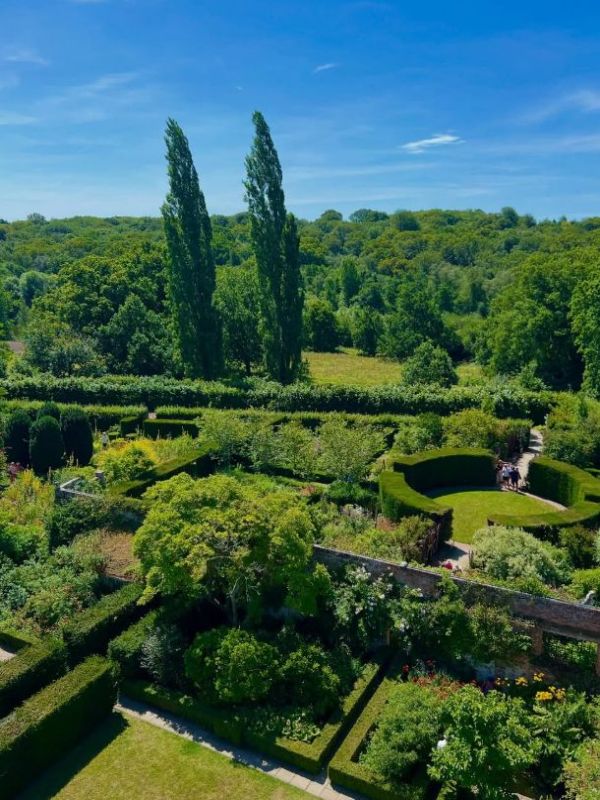
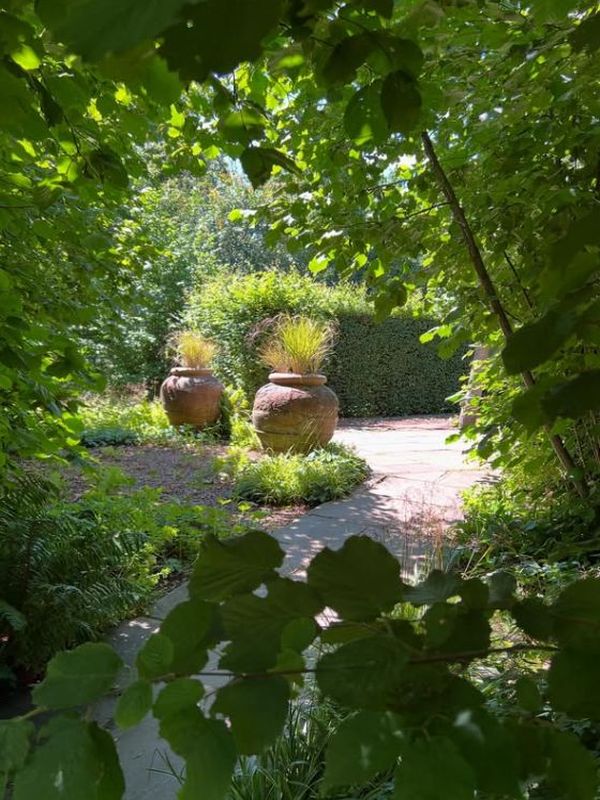
Sissinghurst Castle Garden in Kent is the love-filled living memoire of an unusual marriage
Harold Nicolson was responsible for a certain classical elegance and austerity in planning the garden. He designed the main pathways & hedges on select axes in relation to the existing buildings. Vita Sackville-West brought a rich and romantic profusion to the planting. The result is a garden inviting you to explore what might lie beyond the next hedge or walk whilst keeping it hidden. Then, on arrival in the next space, the profusion of planting, flowers and colour combinations is a sheer delight for the senses.
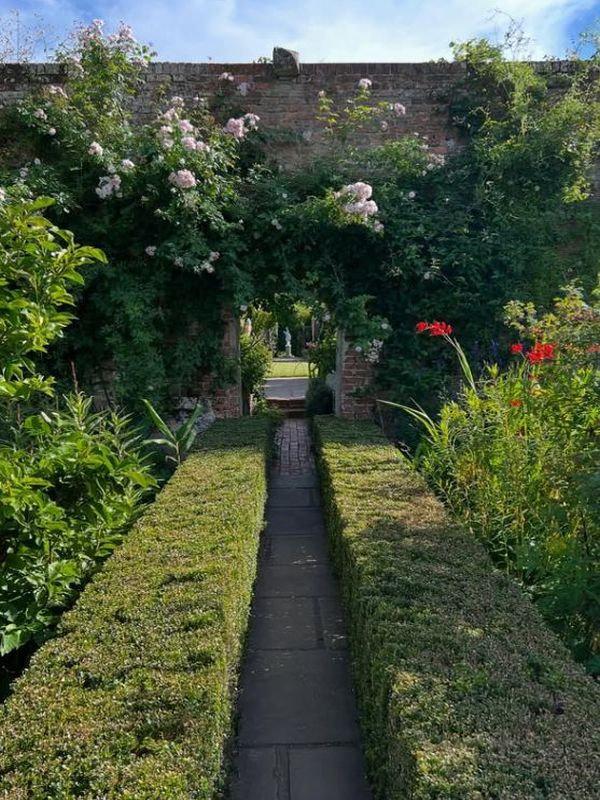
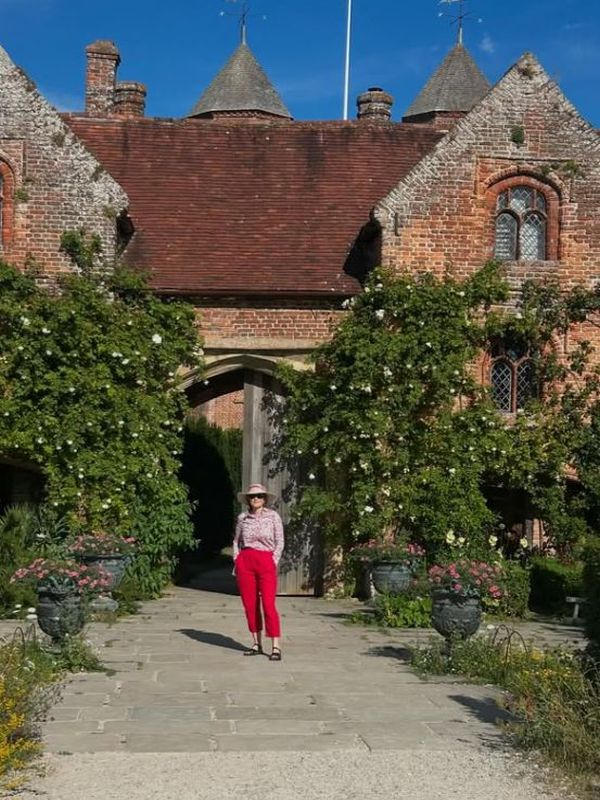
I loved being able to see the garden design from the elevation of The Tower. The rose garden was past its prime due to the heatwave in Europe but we saw many of the perennials at their peak. The contrast of wilder areas, such as The Orchard, with the densely planted colourful Cottage Garden (detailed in my recent Instagram post) provides an opportunity to rest in the calm green shade before viewing the next breath-taking room.
 As a garden designer a few take-home notes include:
1. Create varied garden rooms in a large space.
2. Hedges and walls and pathways are part of the initial planning to create structure and formality.
3. Collate colours in different rooms.
4. Dense planting leads to a massed, colourful impact.
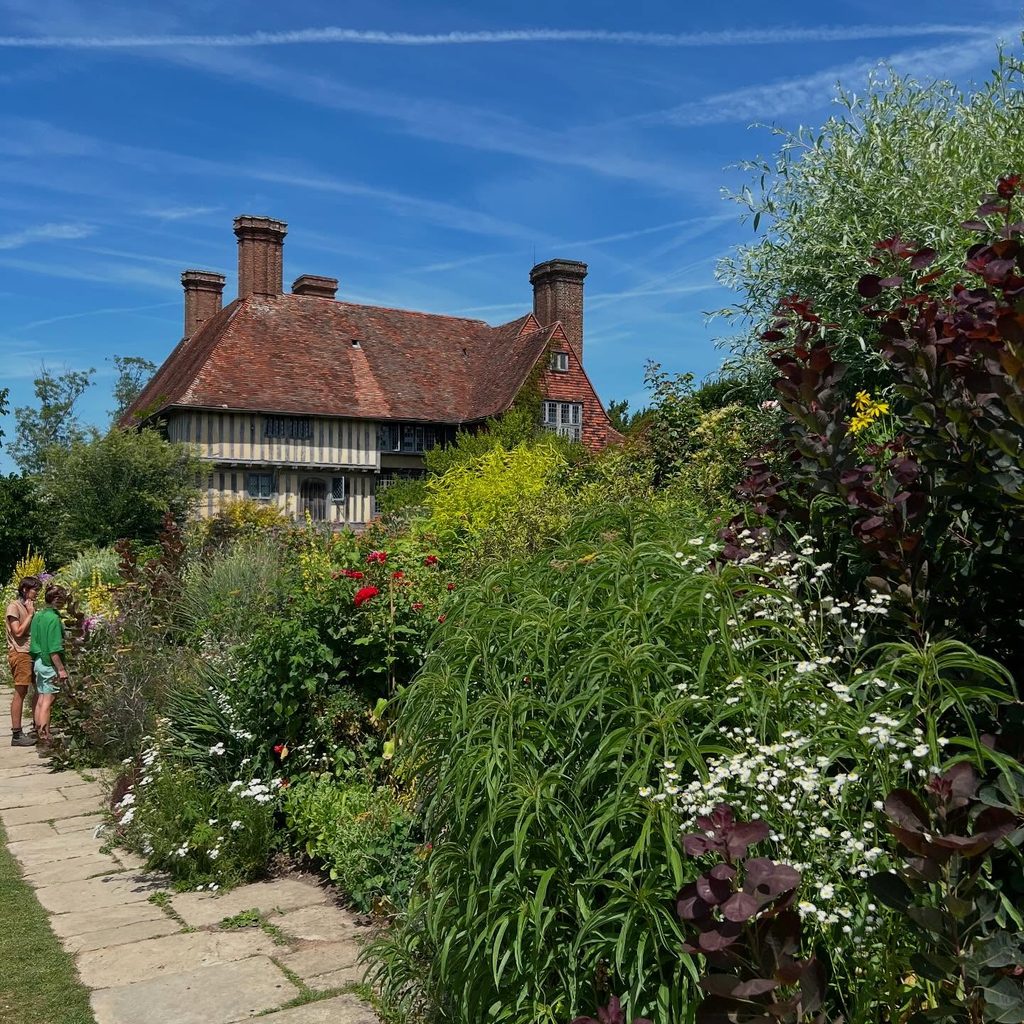
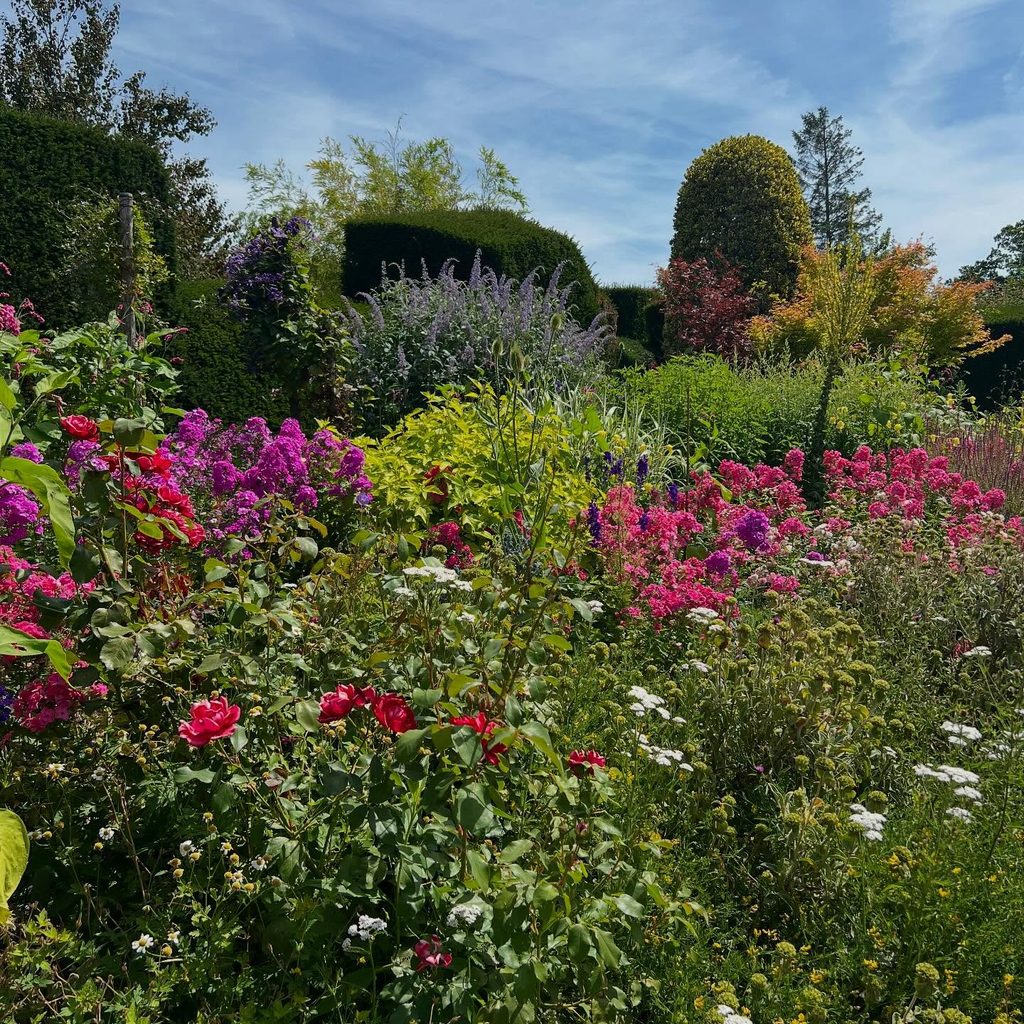
Great Dixter in Rye
Great Dixter is a garden I’ve had my eye on visiting for decades. Its deceased owner Christopher Lloyd was a prolific and influential garden writer. On a hot summers day in early July a group of fellow garden enthusiasts enjoyed a wander around together.
What struck me about this garden was:
- The “jungle of plants” that filled every corner of the garden. We virtually had to wade through plants along the narrow pathways.
- Rewilding seems to have become mainstream with the famous Peacock yews quite shaggy and wild meadows beneath them instead of neatly clipped lawns.
- The enthusiastic planting – a garden created by a true plant lover. Species diversity continues to be encouraged. This has lead to twice as many types of insects found in the formal garden borders than in the outlying estate (Country Life, Oct 4, 2023).
- The clashing colours: Great Dixter is not your typical carefully curated English garden where hot (red, orange & yellow) and cool (pale blues, mauve, light pinks and whites) colours are separated. The brightly coloured flowers felt like we were walking inside a modern painting.
- The absence of ground covers.
- A sense of abundance.
- The bright colours jumped out in the heat of summer whilst paler colours faded and seem insipid in the heat of the day.
- We all loved our visit and the garden provided food for thought. It throws some of the gardening rules out the window and in so doing creates an element of surprise and originality around every corner.
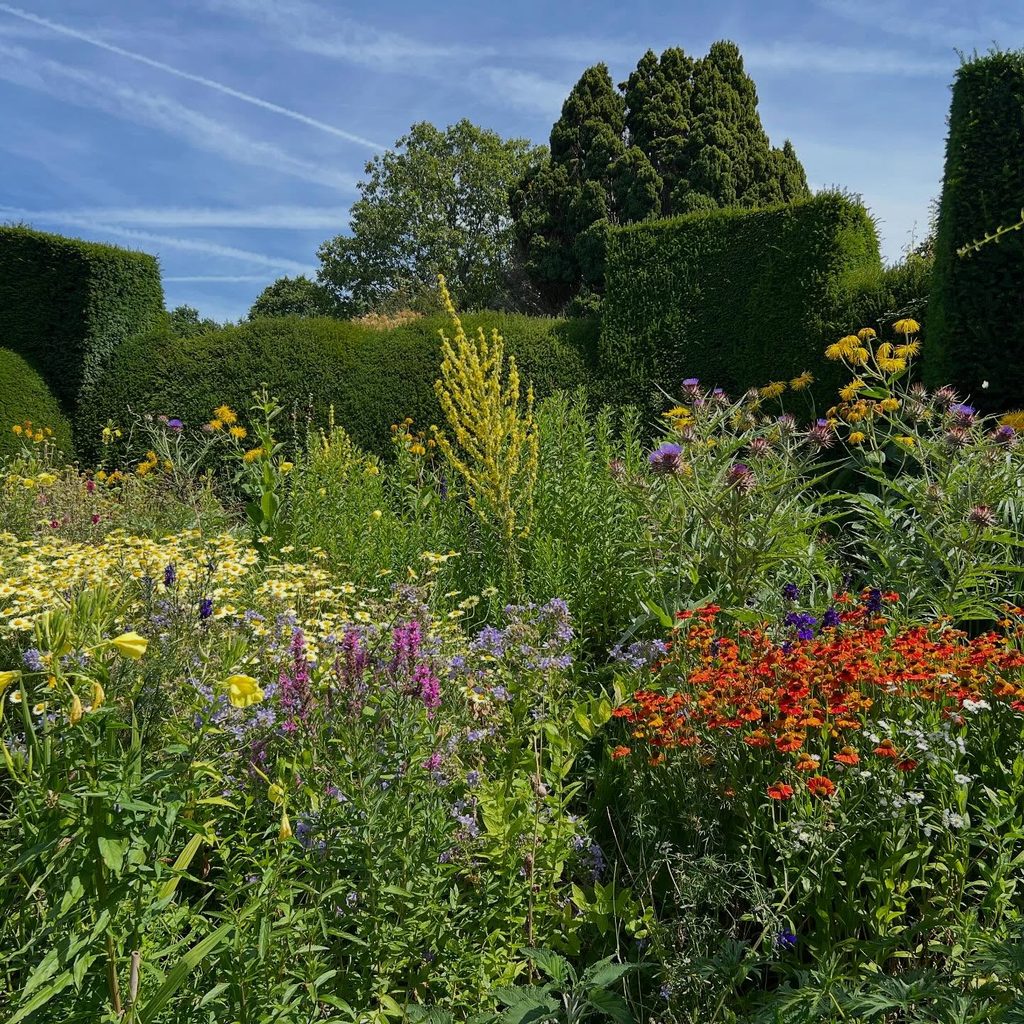
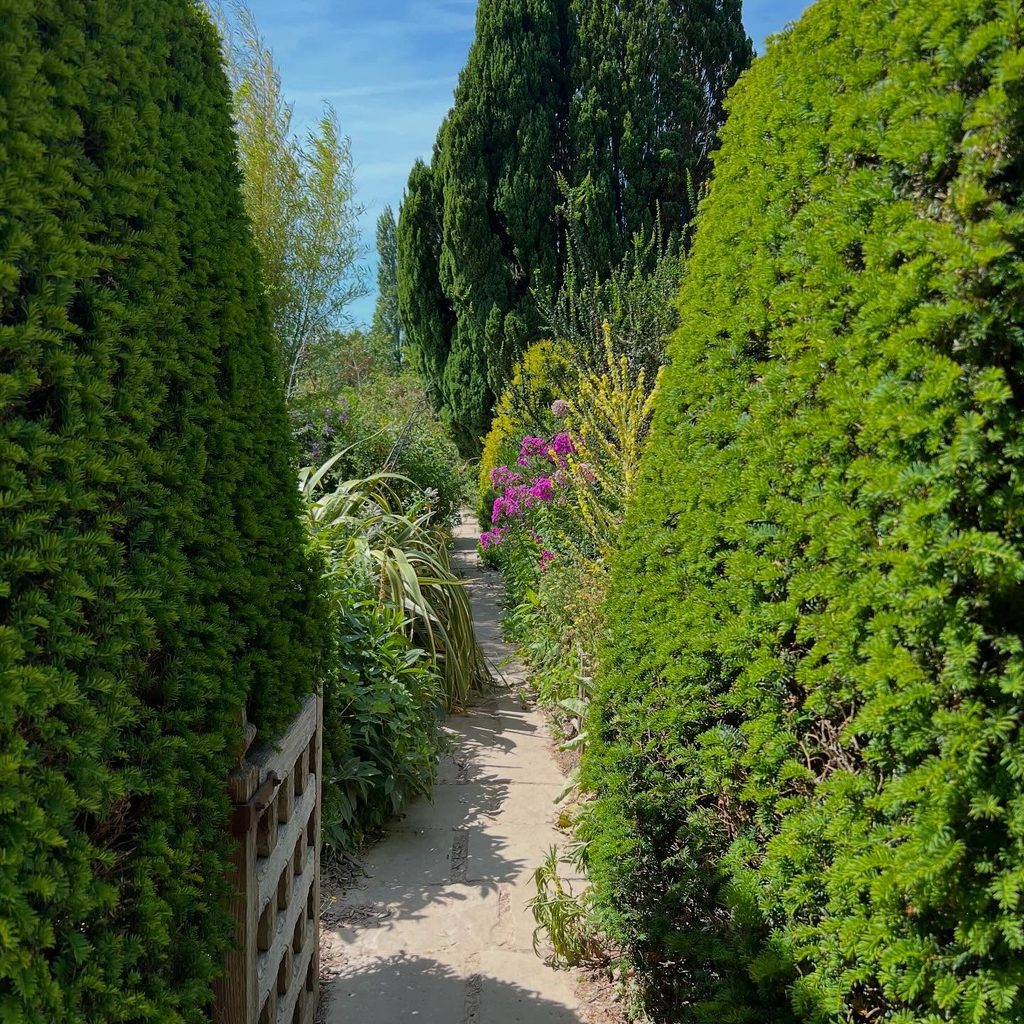
Take home thoughts:
 As our temperatures rise consider brighter flowers and ‘hot’ colours.
 Perennials can provide ‘jungle vibes’. Perhaps there’s a place for clashing colours…?
 Plant species biodiversity encourages insect species diversity.
Loire valley chateaus & gardens, France
Visiting the Loire Valley in 2025 was an incredible treat. I have dreamed of visiting Villandry for decades, and I heard about the Loire Valley castles along the river from friends who managed to get themselves there in their twenties. It was like escaping into a Fairy Tale. For the next few newsletters, we want to feature a different garden from this area every time.
Ten take-home ideas from the Loire Valley:
1. Consider adding structure to your garden by planting hedges, creating rooms and using plants as sculptural elements.
2. Stick with glorious green for year-round visual impact.
3. Create tension in your garden by adding areas of wildness combined with areas of formality.
4. Less is more: using fewer species can create a greater visual impact, reduce your plant palette.
5. Create a wild garden that could attract lots of different pollinators and contributes to rewilding.
6. Add a sculpture or water feature into your garden. You could even add a touch of madness with a curious topiary.
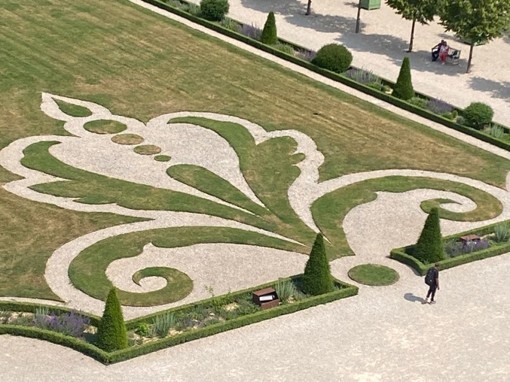
7. Ask a garden designer to design a pattern in your garden and/or create a parterre.
8. Indulge yourself and convert a sunny section of your garden into an informal or formal flower garden to enjoy cut flowers in your home.
9. Explore hard landscaping features to enhance your home’s lifestyle: stone steps and/or edging, shady pergolas, a secret nook to enjoy your morning coffee, create an outdoor seating area in your garden.
10. Broaden your plant palette: explore other species in a genus that you are familiar with e.g. Hydrangeas, Agathosma, Protea, Leucadendron, Salvia, Pelargonium.
Chambord
Our first stop was Chambord, the famous and very grand hunting castle of Francis I, who became king of France in 1515. Although its design was inspired by Medieval castles, he only visited a few times. Visiting the castle was a massive undertaking requiring thousands of servants. They brought all the furniture and food with them. Living in the castle permanently would have been impractical, given its enormous size and the difficulty in heating it. The most impressive aspect of Chambord is the renowned double spiral staircase. I have to admit I wasn’t that impressed by the staircase until we all decided to ascend it again before departing, but we split into two groups. Then your brain gets scrambled as you don’t get to meet up with the other group ascending the staircase, even though you both headed up at the same time. Reminiscent of the double helix first described by Crickson & Watt, it is an incredible feat, thought to have been designed by Leonardo da Vinci not long before he died.
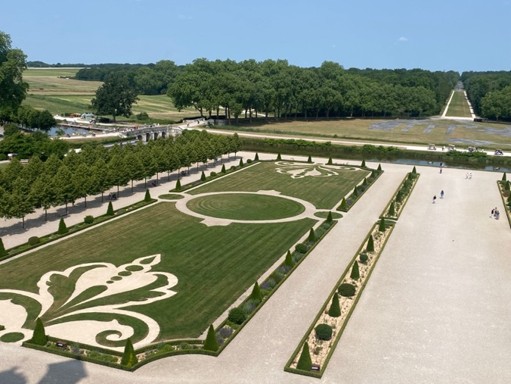
There is no evidence of the Renaissance garden created during Francis’s time. The formal French gardens emerged during Louis XIV’s reign. The grounds cover 5,440 hectares, and stag and wild boars roam freely. These gardens are all about grandeur and were designed to complement the castle’s regal grandeur. The view of the 18th-century garden is quite extraordinary when viewed from above. The formal French gardens have recently been restored to their elegant, high-maintenance 18th-century plan.
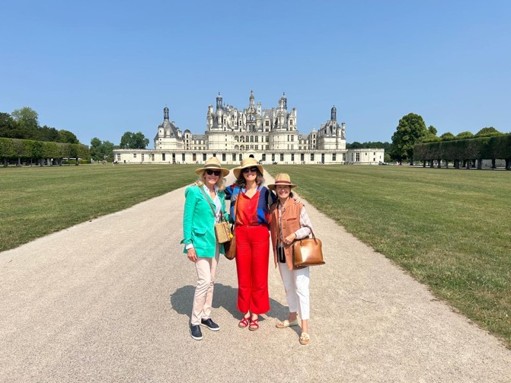
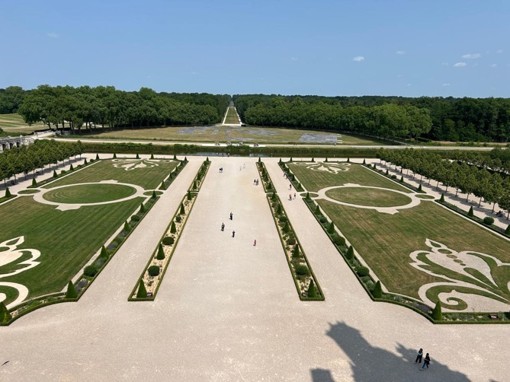
Chambord Castle façade with fellow flower enthusiasts. Chambord Formal 18C gardens viewed from above on the castle terrace and across the estate.
If you would like to enquire about my garden landscaping services, please contact me: rowenasmuts@gmail.com / +27 64 769 3382